
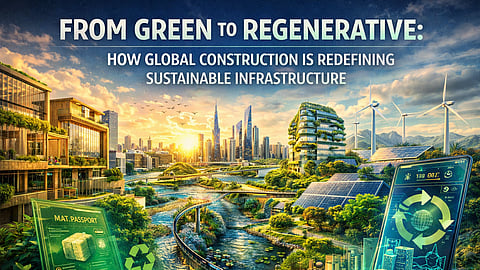
From Green to Regenerative: How Global Construction is Redefining Sustainable Infrastructure

The global construction and infrastructure sector, long a significant contributor to environmental impact, is undergoing a transformative shift. While "green building" has been a focus for years, the industry is now moving beyond mere mitigation to embrace truly regenerative and circular principles worldwide.
This evolution signifies a commitment not just to reducing harm, but to actively restoring and enhancing natural systems through the built environment.
Beyond Green: Global Construction's Pivot to Regenerative and Circular Infrastructure
The scale of human development demands an approach that transcends traditional sustainability. With resource depletion, vast waste generation, and significant carbon emissions linked to construction, a paradigm shift is imperative. Regenerative design and circular economy principles are emerging as the guiding forces for a new era of infrastructure that aims to contribute positively to ecological and social well-being.
The Imperative for Regeneration
The sheer volume of materials consumed and waste produced by the construction industry necessitates a radical rethink. Buildings and infrastructure projects account for a substantial portion of global energy use, greenhouse gas emissions, and raw material extraction.
As climate change accelerates and urban populations grow, there is an urgent need for infrastructure that not only withstands environmental pressures but actively contributes to solutions. This means designing and building in a way that allows natural systems to thrive, rather than merely minimizing their degradation.
Pillars of Regenerative Construction
Circular Materials & Design: The cornerstone of this shift is the intelligent use of materials. This involves designing buildings and infrastructure for disassembly, enabling components to be easily reused, repaired, or recycled at the end of their life cycle. Innovations in materials include:
Bio-based solutions: Timber, bamboo, hempcrete, and even mycelium are gaining traction as renewable, low-carbon alternatives to conventional materials.
High-recycled content: The increased use of recycled concrete aggregates, steel, and plastics reduces demand for virgin resources.
Digital Material Passports: Technologies like blockchain and digital twins are being explored to create "material passports" that track the origin, composition, and potential for reuse of every component in a structure, facilitating a truly circular flow.
Energy Positive & Nature-Integrated Infrastructure: Regenerative buildings aspire to be more than just energy efficient; they aim to be energy positive, generating more power than they consume through integrated renewable energy systems. Beyond energy, there's a strong emphasis on integrating nature directly into urban fabrics:
Biophilic Design: Incorporating natural light, ventilation, and elements like green roofs, living walls, and internal gardens to improve human well-being and ecological function.
Integrated Water Management: Systems for rainwater harvesting, greywater recycling, and natural wastewater treatment reduce demand on municipal supplies and mitigate urban runoff.
Biodiversity Enhancement: Designing infrastructure that supports local ecosystems, such as eco-bridges for wildlife passage, permeable surfaces to recharge groundwater, and habitat creation within urban green spaces.
Smart & Adaptive Technologies: Technology is a crucial enabler for regenerative construction.
Artificial Intelligence (AI) and Internet of Things (IoT): These technologies optimize resource use, predict maintenance needs, and enhance operational efficiency throughout a building's lifecycle.
Digital Twins: Virtual replicas of physical assets allow for real-time monitoring, simulation of performance, and proactive management, reducing waste and improving longevity.
Prefabrication and Modular Construction: These methods reduce on-site waste, improve quality control, and accelerate project timelines, often with a smaller environmental footprint.
Global Momentum and Policy Drivers
Across the globe, policy and investment are increasingly aligning with these regenerative goals. The European Union's Circular Economy Action Plan, for instance, significantly influences construction practices, pushing for resource efficiency and waste reduction.
North America is seeing growing initiatives for net-zero and resilient infrastructure, while Asian megaprojects are often incorporating advanced green technologies from their inception. Developing nations are also exploring opportunities to leapfrog traditional, high-impact development models directly to sustainable and regenerative approaches.
Governments are introducing carbon pricing, green building codes, and incentives for sustainable materials. Simultaneously, the rise of sustainable finance and ESG (Environmental, Social, and Governance) investment criteria are channeling capital towards projects that demonstrate strong environmental performance and social responsibility.
Challenges and Opportunities
While the vision is clear, challenges remain. The initial costs of advanced materials and technologies can be higher, though long-term operational savings and enhanced asset value often outweigh this. Complex supply chains need to evolve to support circular material flows, and there is a critical need to upskill the workforce in regenerative design and construction techniques.
However, these challenges are dwarfed by the opportunities. The shift to regenerative construction opens new markets for innovative materials and technologies, fosters greater resilience against climate impacts, and fundamentally improves the quality of life for communities.
The Road Ahead
IPL 2026 represents a turning point where sport, business, and technology converge. Franchises are no longer just teams—they are global enterprises, talent factories, and entertainment brands.
As investments rise and strategies evolve, the IPL is not just redefining franchise cricket—it is redefining the future of sports leagues worldwide. The future of construction is not just about being "less bad"; it's about being actively good.
The global pivot to regenerative and circular infrastructure marks a profound shift in mindset, moving from an extractive relationship with the planet to one of restoration and enhancement. This movement promises a more sustainable, resilient, and ultimately thriving built environment for generations to come.
