
Micro Hydro Power Lights Up New Opportunities in Remote Nepal
For Lakshmi Kumari Sunar, access to reliable electricity has meant far more than brighter evenings. Living in the remote mountain district of Bajura in Nepal, she is among many villagers whose lives have been reshaped by micro hydro power (MHP).
Clean, dependable electricity has reduced indoor air pollution, eased daily drudgery, and opened new income opportunities in a region long cut off from the national grid.
Decentralised Power for Remote Communities
Nepal’s challenging geography has made universal electrification a difficult task. Nearly 80% of the country’s 29.6 million people live in rural areas, many in isolated mountain settlements.
These communities often face limited infrastructure, difficult terrain, and high energy costs. This local reality reflects a global challenge, where hundreds of millions of people—mostly in remote and low-income regions—still lack access to modern energy.
Decentralised renewable energy (DRE) solutions are increasingly filling this gap. Technologies such as micro and mini-hydro power plants use the natural flow of nearby rivers and streams to generate electricity independently of the main grid, making them ideal for last-mile communities.
Why Micro Hydro Matters in the Mountains
Micro hydro power plants provide more than just electricity. They reduce dependence on imported fossil fuels, cut emissions, and improve energy security. For mountain communities in Nepal, which rely heavily on agriculture and animal husbandry, reliable power is becoming essential as climate change disrupts traditional livelihoods.
By enabling lighting, communications, and productive uses of energy, MHPs are helping communities adapt while building long-term resilience.
Expanding Access Through Global Partnerships
By 2024, Nepal’s off-grid hydropower capacity reached 36.5 megawatts, connecting around 921,000 people in rural areas to electricity.
To scale up decentralised renewable energy solutions, the Government of Canada—through Natural Resources Canada (NRCan)—and the International Renewable Energy Agency (IRENA) have been advancing the Global Initiative for Transitioning Remote Communities to Renewable Energy, launched at COP26 in Glasgow in 2021.
The initiative now places greater emphasis on implementation at the community level, ensuring that clean energy systems are not only installed but sustained over the long term.
Building Local Skills to Sustain Power
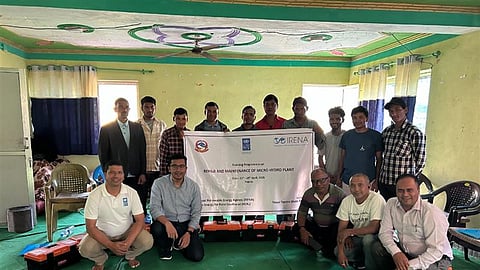
In Nepal, IRENA has partnered with the United Nations Development Programme’s Renewable Energy for Rural Livelihood (UNDP-RERL) programme to strengthen local capacity.
Through targeted training, local technicians are learning how to operate and maintain micro hydro plants, while also gaining business development skills that enable productive uses of decentralised renewable energy.
These trained technicians play a critical role in ensuring uninterrupted power supply for villages like Lakshmi’s.
From Manual Labour to Higher Productivity
For Lakshmi, steady electricity has directly translated into economic empowerment. With access to micro hydro power, she replaced her manual sewing machine with an electric one, transforming her small tailoring business.
“The lasting electricity from the micro hydro power and the electric sewing machine have changed my life,” she says. “Electric power has reduced my workload and increased my productivity. I can now stitch more clothes with less effort and in much less time.”
As a result, her monthly income has risen to around NPR 30,000 (approximately USD 200), providing greater financial stability for her household.
Powering Community Transformation
The impact of micro hydro power extends well beyond individual households. Lakshmi notes visible changes across her village, from reliable lighting to easy phone charging that keeps people connected. Households are increasingly adopting appliances such as refrigerators and washing machines, signalling a shift in living standards.
At the same time, small shops and local enterprises are beginning to emerge, highlighting how decentralised renewable energy can stimulate job creation and local economic growth in remote areas.
Reducing Migration, Creating Local Opportunity
Reliable, round-the-clock electricity is also reshaping aspirations. “Most people here would normally look for jobs in bigger cities or overseas,” Lakshmi says. “Hopefully, with more productive uses of this sustainable energy, we can create more opportunities locally.”
A Sustainable Path Forward
Micro hydro power is proving to be more than an energy solution for Nepal’s remote mountain regions. It is a catalyst for inclusive development—supporting livelihoods, strengthening resilience to climate change, and enabling communities to thrive where they are.
For villages like Lakshmi’s, clean, community-driven energy is not just lighting homes—it is illuminating a sustainable future.
(Source: IRENA)
