
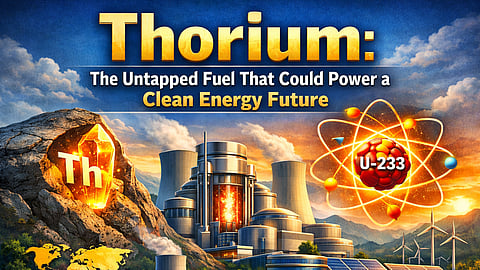
Thorium: The Untapped Fuel That Could Power a Clean Energy Future

As the world accelerates toward net-zero emissions, thorium is emerging as a highly promising alternative nuclear fuel. Safer, more abundant, and more efficient than uranium, thorium could reshape our approach to clean electricity for generations.
What Makes Thorium Special?
Thorium-232 is a naturally occurring element found in soil and rocks. Unlike uranium, thorium itself cannot undergo fission directly — instead, it transforms into uranium-233 in reactors, which then produces energy through fission.
Modern reactor designs, such as molten-salt and fast breeder systems, are being developed to use thorium more efficiently and safely, marking a major technological shift for the nuclear industry.
Vast Global Reserves
Thorium is far more abundant in nature than uranium, making it a strategic long-term resource.
Major reserves exist in:
India
Australia
Brazil
United States
Canada
South Africa
India holds some of the world’s highest concentrations, particularly in monazite sands along the coasts of Kerala, Odisha, Tamil Nadu, and Andhra Pradesh. This positions India to potentially lead global thorium power development.
How Thorium Generates Electricity
Thorium absorbs a neutron and becomes uranium-233.
Uranium-233 undergoes fission, releasing heat.
This heat produces steam that drives turbines and generates electricity.
Because thorium reactors can extract more energy from fuel, they offer higher efficiency than today’s uranium-based systems.
Why Thorium Matters for Clean Energy
1. Cleaner Waste Profile
Thorium reactors generate smaller quantities of long-lived radioactive waste, reducing long-term storage risks.
2. Improved Safety Potential
Molten-salt thorium reactors operate at low pressure and can shut down passively, minimizing meltdown risks.
3. High Fuel Efficiency
Nearly all mined thorium can be used in reactors, whereas only a fraction of uranium ore is usable.
4. Reduced Proliferation Risk
Thorium fuel cycles make it more difficult to extract weapons-grade materials, strengthening global nuclear security.
Challenges to Overcome
While thorium is promising, several hurdles remain:
Limited commercial deployment and operational experience
Need for significant R&D investment
Infrastructure designed mainly for uranium fuel
Complexities in handling uranium-233
Some countries — including India and China — are actively advancing thorium reactor research, signaling growing momentum.
The Road Ahead
With abundant reserves, strong safety advantages, and a smaller environmental footprint, thorium represents one of the most compelling options for clean electricity generation.
For countries seeking long-term, low-carbon baseload power, thorium could be the cornerstone of a new nuclear era — if governments and industries commit to the technology now.
