
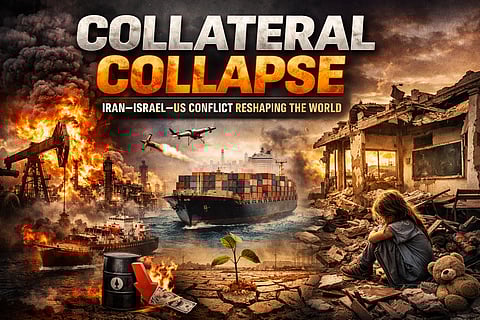
Collateral Collapse: How the Iran–Israel–US Conflict Is Disrupting Energy, Education and Global Stability

What began as a strategic confrontation between Iran, Israel, and the United States has rapidly transformed into a multi-layered humanitarian crisis. Beyond missile strikes and geopolitical posturing, the conflict is dismantling the very systems that sustain civilian life—energy, water, food, education, and mobility.
The scale is staggering. Entire regions are witnessing displacement, infrastructure collapse, and civilian casualties, including attacks on schools and residential areas. Reports indicate strikes killing civilians, even children, in targeted zones, underscoring how the war has blurred the line between military and humanitarian spaces.
Energy Infrastructure Under Fire: A Blow to Sustainability
The deliberate targeting of oil fields, gas plants, and refineries marks a dangerous escalation. The attack on Iran’s South Pars gas field alone disrupted a significant portion of production and halted refinery output.
War Without Borders: How the Iran–Israel Conflict Is Spiralling Into a Humanitarian Catastrophe
Across the Gulf, energy facilities—from Qatar to Saudi Arabia—have been hit, triggering cascading disruptions in global supply chains.
This is not just about fuel shortages. It is a direct assault on sustainability:
Destruction of refineries increases environmental hazards and toxic emissions
Gas supply shocks are pushing countries back toward coal, reversing climate progress
Clean energy transitions are being delayed due to instability.
Energy experts now warn of long-term damage to infrastructure that could take years to rebuild, with natural gas markets particularly vulnerable.
Choking the World’s Artery: Shipping Routes in Crisis
At the heart of the crisis lies the Strait of Hormuz—through which nearly 20% of the world’s oil flows. Its disruption has effectively choked global trade.
Hundreds of ships remain stranded
Tanker traffic has dropped sharply
War-risk insurance costs have surged dramatically
The blockade has ripple effects far beyond the Gulf:
Supply chains for food, fuel, and medicines are breaking down
Humanitarian aid delivery is being delayed or halted
Global inflation is rising due to transport and energy costs
As one analysis notes, the war is “choking off disaster relief supply chains,” compounding crises in already vulnerable regions.
From Oil to Food and Water: The Domino Effect
The humanitarian impact extends into basic survival systems.
Up to 70% of food imports in Gulf countries have been disrupted
Prices of essentials have surged by 40–120%
Attacks on desalination plants threaten drinking water supplies in water-scarce nations
This convergence of energy, food, and water crises is unprecedented. The International Energy Agency has already described the situation as one of the “greatest global energy security challenges in history.”
Civilian Infrastructure: Schools, Cities, and Lives Destroyed
The war’s toll on civilian infrastructure is equally devastating:
Schools and residential areas have been struck
Urban centers like Tehran and Beirut have faced heavy bombardment
Millions are displaced across the region
Education systems are collapsing in conflict zones, robbing a generation of stability and opportunity. What is being destroyed is not just infrastructure—but the future of entire societies.
A Global Crisis, Not a Regional One
The consequences are now global:
Oil prices nearing or exceeding $100 per barrel
Shipping costs and insurance premiums soaring
Countries like India scrambling to diversify energy sources
Even distant economies are feeling the shock through inflation, supply shortages, and energy insecurity.
Conclusion: War Against Sustainability Itself
This conflict is no longer confined to borders—it is a war against interconnected systems that sustain human life. Energy grids, shipping routes, food supply chains, and social infrastructure are all under strain.
What makes this crisis particularly alarming is its systemic nature:
Destroy oil → disrupt transport → inflate food prices
Hit desalination → create water scarcity
Block shipping → stall aid → deepen humanitarian crises
The world is witnessing not just a geopolitical conflict, but a cascading breakdown of sustainability itself.
Unless de-escalation becomes urgent and real, the legacy of this war may not just be territorial—but generational, environmental, and profoundly human.
Read More: How Today’s Wars and Armed Conflicts Are Quietly Accelerating Climate Change
