
Understanding the Carbon Footprint: Why It Matters and How We Can Reduce It

The world today is experiencing record-breaking heat, rising sea levels, and extreme weather events at a pace faster than previous scientific predictions. At the heart of this accelerating climate crisis lies a key measure of human impact: the carbon footprint.
As countries, industries, and individuals strive to build a sustainable future, understanding and reducing our carbon footprint has become a global priority.
What Is a Carbon Footprint?
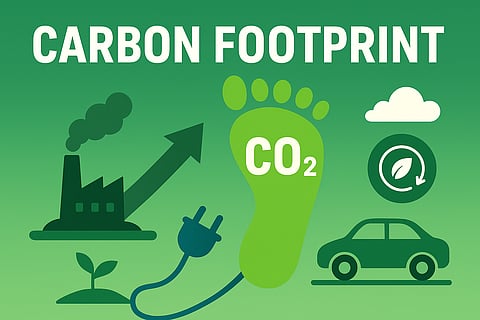
A carbon footprint represents the total amount of greenhouse gases—primarily carbon dioxide (CO₂), methane (CH₄), and nitrous oxide (N₂O)—released directly or indirectly by an individual, organization, event, or product. These emissions are typically measured in CO₂ equivalents (CO₂e).
Common sources include:
Electricity consumption
Transportation and fuel use
Manufacturing and industrial activity
Agriculture and livestock
Waste generation and disposal
Supply chains and product lifecycles
Every action, from boiling water to operating a factory, leaves a climate impact.
Why Reducing the Carbon Footprint Is Essential
The accumulation of greenhouse gases traps heat in the atmosphere, amplifying global warming. A lower carbon footprint means:
Reduced climate risk such as droughts, floods, and storms
Cleaner air and healthier communities
Energy security through efficient and renewable sources
Cost savings from reduced energy consumption
Compliance with emerging global carbon regulations
For businesses, it also strengthens brand trust and investor confidence.
Where Emissions Come From
Globally, emissions are dominated by:
Electricity and Heat Production (25%)
Industry (24%)
Agriculture, Forestry & Land Use (18%)
Transportation (14%)
Buildings (6%)
Understanding these sectors helps identify high-impact areas for reduction.
Practical Ways to Reduce the Carbon Footprint
1. Transition to Clean Energy
Switching to renewable sources—solar, wind, hydro, or nuclear—dramatically cuts emissions. Many countries and corporates are adopting clean power purchase agreements to accelerate decarbonization.
2. Improve Energy Efficiency
Simple steps such as LED lighting, efficient appliances, smart sensors, and building insulation reduce energy waste significantly.
3. Rethink Mobility
Choosing public transport, carpooling, electric vehicles, or even working remotely lowers transportation-related emissions.
4. Sustainable Production and Supply Chains
Industries are adopting greener manufacturing, circular materials, and carbon-neutral logistics to cut lifecycle emissions.
5. Climate-Smart Agriculture
Precision farming, low-carbon fertilizers, and regenerative farming help reduce agricultural emissions while improving soil health.
6. Waste Reduction and Recycling
Composting, recycling, and sustainable packaging reduce landfill emissions and support a circular economy.
7. Offset What Cannot Be Reduced
Investing in carbon offset projects—like reforestation, renewable energy, and methane capture—helps balance unavoidable emissions.
Digital Tools Playing a Big Role
AI, IoT, and blockchain are now central to real-time carbon tracking. Companies can measure emissions across operations, forecast climate risks, and automate sustainability reporting with unprecedented accuracy.
A Shared Responsibility
Reducing the carbon footprint is not solely the responsibility of governments or corporations. Every individual action matters—from reducing energy use to choosing sustainable products.
The Road Ahead
As climate commitments strengthen globally, the carbon footprint is emerging as the defining metric of environmental responsibility. Nations, businesses, and citizens who act early will lead the transition to a low-carbon future.
