
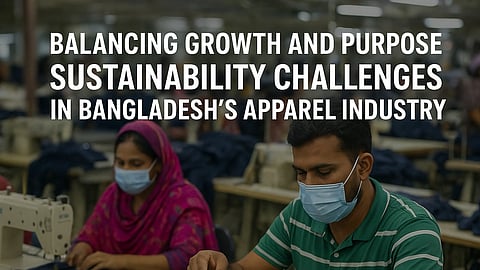
Balancing Growth and Responsibility: Sustainability Challenges in Bangladesh’s Apparel Industry

Bangladesh’s ready-made garment (RMG) sector is a cornerstone of its economy, employing around 4 million workers and accounting for a major share of the country’s exports.
At the same time, increasing global demand—especially from fast fashion markets—has amplified the industry’s environmental and social burdens. As the world moves toward responsible consumption, sustainability failures in this sector are becoming impossible to ignore.
Environmental Challenges
Water Pollution and Overuse
The textile and apparel industry is highly water-intensive. Dyeing, washing, and finishing processes release toxic chemicals, salts, and heavy metals into rivers and groundwater, affecting ecosystems, agriculture, and human health.
Beauty With a Smaller Footprint
Air Pollution and Energy Use
Many factories rely on fossil fuels for energy, producing high greenhouse gas emissions and local air pollutants. Synthetic fibers contribute further, shedding microplastics into water systems.
Solid Waste and Textile Waste
Fabric scraps, cotton dust, sludge, and offcuts often end up in landfills or are burned openly, causing soil contamination, air pollution, and health risks. Recycling remains minimal.
Climate-Related Vulnerabilities
Climate change—extreme weather, floods, and heat stress—disproportionately affects low-income workers, disrupting livelihoods and production.
Social & Labor Issues
Labor conditions remain a serious concern. Many workers face unsafe environments, long hours, and low wages.
Combined with environmental hazards, this puts workers at risk of accidents and long-term health problems. The pressure of fast fashion demands often forces factories to cut corners, further compromising worker welfare.
Structural & Economic Challenges
Many factories, especially smaller ones, lack resources to invest in sustainable technologies such as wastewater treatment or energy-efficient systems.
Even where such systems exist, maintenance and enforcement are often insufficient. Global pressure for low-cost production also conflicts with the costs of sustainable practices.
Efforts and Opportunities
Despite challenges, there are signs of progress. Some factories are adopting water stewardship, responsible chemical management, and energy-efficient practices.
Opportunities exist to rebrand part of Bangladesh’s apparel sector as eco-friendly, focusing on recycling, circular economy practices, and better labor standards. International collaboration, green investment, and transparent supply chains can accelerate this shift.
Conclusion
Bangladesh’s apparel industry is a paradox: a key driver of national growth yet deeply linked to environmental degradation and labor challenges. Without urgent reforms, the long-term consequences—pollution, climate stress, worker health crises, and reputational damage—could be severe.
Sustainability is not just an ethical choice; it is essential for the industry’s survival.
Governments, factory owners, global brands, and consumers must collaborate to ensure that growth does not come at the expense of people or the planet. Only then can Bangladesh’s garment sector secure a future that is both profitable and responsible.
Read More: UK Watchdog Bans Nike, Lacoste & Superdry Ads Over Misleading Sustainability Claims
