
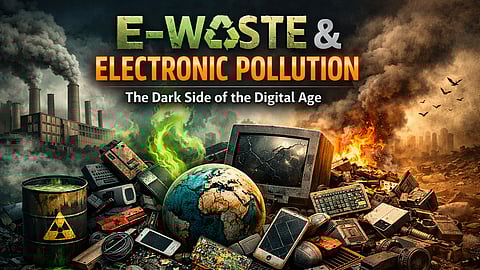
E-Waste and Electronic Pollution: The Dark Side of the Digital Age

From smartphones and laptops to electric appliances and smart devices, electronics have become inseparable from modern life. Each year, innovation accelerates, product lifecycles shrink, and consumers upgrade faster than ever before. Yet behind this digital convenience lies a growing and often overlooked crisis: electronic waste, or e-waste.
E-waste represents the discarded backbone of our digital economy—obsolete phones, broken TVs, outdated computers, cables, batteries, and countless other electronic components. When improperly handled, these items release toxic substances into the environment, giving rise to electronic pollution that threatens ecosystems, human health, and sustainable development.
Understanding E-Waste: What It Includes and Why It Matters
E-waste includes all electrical and electronic equipment that has reached the end of its useful life. This ranges from large household appliances like refrigerators and air conditioners to small items such as earbuds, chargers, and circuit boards.
What makes e-waste uniquely dangerous is its complex composition. Electronics contain valuable materials like gold, copper, and rare earth metals, but also hazardous substances such as lead, mercury, cadmium, brominated flame retardants, and lithium. When dumped in landfills or processed informally, these toxic elements leach into soil, water, and air—creating long-term pollution that is difficult to reverse.
The Scale of the Crisis: A Fast-Growing Global Challenge
E-waste is now one of the fastest-growing waste streams in the world. Rapid urbanization, rising incomes, and the global spread of digital technologies have dramatically increased consumption of electronics. However, recycling and recovery systems have not kept pace.
A significant portion of global e-waste is either:
Dumped in landfills,
Burned in open air,
Or exported to developing regions under the guise of “second-hand goods.”
In many cases, informal workers dismantle electronics manually without protective equipment, exposing themselves and surrounding communities to severe health risks.
Electronic Pollution and Environmental Damage
Improper disposal of e-waste causes widespread environmental harm:
Soil contamination: Heavy metals seep into agricultural land, reducing fertility and entering the food chain.
Water pollution: Toxic runoff contaminates groundwater, rivers, and coastal ecosystems.
Air pollution: Burning cables and plastic components releases dioxins and fine particulate matter.
Biodiversity loss: Polluted habitats weaken ecosystems and threaten wildlife survival.
Unlike organic waste, electronic pollutants persist for decades, accumulating silently while their effects compound over time.
Human Health Impacts: An Invisible Threat
Electronic pollution directly affects human health, particularly in communities near informal recycling hubs. Exposure to toxic substances found in e-waste has been linked to:
Neurological disorders and developmental issues in children
Respiratory diseases
Kidney and liver damage
Hormonal and reproductive disorders
Increased cancer risks
Children and pregnant women are especially vulnerable, making e-waste not just an environmental issue, but a public health emergency.
Why E-Waste Is Also a Resource Problem
Ironically, e-waste is not just a pollution challenge—it is also a missed economic opportunity. Discarded electronics contain significant quantities of precious and critical metals essential for renewable energy systems, electric vehicles, and digital infrastructure.
When recycled responsibly, e-waste can:
Reduce the need for environmentally destructive mining
Lower carbon emissions associated with raw material extraction
Support circular economy models
Create formal, safer jobs in recycling and material recovery
The problem lies not in the waste itself, but in how society manages it.
Policy, Responsibility, and the Role of Industry
Addressing electronic pollution requires coordinated action across governments, manufacturers, and consumers. Key strategies include:
Extended Producer Responsibility (EPR): Holding manufacturers accountable for the full lifecycle of their products.
Eco-design: Creating electronics that last longer, are repairable, and easier to recycle.
Formal recycling infrastructure: Investing in safe, technologically advanced recycling facilities.
Regulation of transboundary e-waste trade: Preventing illegal dumping in vulnerable regions.
Without strong enforcement and global cooperation, policies remain ineffective on the ground.
The Consumer’s Role: From Convenience to Conscious Choice
Consumers play a crucial role in reducing e-waste. Simple actions can make a meaningful difference:
Extending the life of devices through repair and reuse
Choosing durable and upgradeable products
Disposing electronics only through authorized collection systems
Supporting brands with transparent sustainability practices
Shifting from a culture of disposability to one of responsibility is essential in the digital age.
Conclusion: Rethinking Our Relationship with Technology
E-waste and electronic pollution are the unintended consequences of rapid technological progress without sustainable foresight. As the world races toward greater digitalization, the volume of discarded electronics will only rise unless decisive action is taken.
The solution lies in rethinking how electronics are designed, consumed, and discarded. By embracing circular economy principles, strengthening regulation, and fostering responsible consumption, e-waste can be transformed from an environmental liability into a valuable resource.
The future of technology must not be defined by what we leave behind—but by how wisely we manage the progress we create.
