
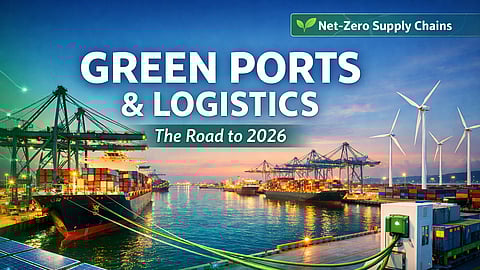
Green Ports & Logistics: Navigating a Sustainable Future — Vision 2026 and Beyond

As global trade rebounds and environmental urgency intensifies, green ports and logistics have emerged as strategic cornerstones of sustainable supply chains.
Far from being a niche idea, sustainability has migrated to the mainstream — driven by regulation, market demand, and cutting-edge technology — shaping how ports and integrated logistics networks will operate in 2026 and beyond.
1. From Sustainability Aspiration to Operational Reality
In the pursuit of net-zero emissions and reduced environmental impact, ports worldwide are transforming their infrastructure and operations:
Renewable energy integration: Solar, wind, and other clean power sources are increasingly powering terminals and facilities, reducing dependence on fossil fuels.
Electrification of equipment: Traditional diesel-powered cranes, trucks, and yard tractors are being replaced with electric and hybrid alternatives, cutting emissions and noise pollution.
Shore power (cold ironing): Many ports now allow docked vessels to plug into on-shore electricity, dramatically lowering greenhouse gas emissions while in berth.
These measures not only reduce carbon footprints, but also signal a competitive edge — with eco-conscious shippers willing to pay premiums for lower-carbon logistics services.
2. Smart & Digital: The Twin Engines of Efficiency
Green logistics is deeply intertwined with digital transformation:
AI, IoT, and Big Data: Data-driven tools optimize routing, predict cargo flows, and improve berth allocation, helping to cut idle times and emissions.
Integrated port community systems: Blockchain and automated systems streamline documentation, enhance transparency, and reduce delays.
Smart logistics platforms: Predictive analytics and real-time tracking enable better resource use across the supply chain.
Ports are evolving into intelligent hubs where operational excellence and sustainability go hand in hand.
3. Regulation & Market Forces That Shape 2026
Environmental mandates and policy signals are forcing structural change across shipping and logistics:
The International Maritime Organization’s greenhouse gas strategy sets ambitious reduction targets toward net zero, affecting fuel choices and operational practices.
Regional systems like the EU’s emissions trading regime make compliance not optional but financially imperative.
These pressures, combined with growing investor interest in Environmental, Social, and Governance (ESG) criteria, are accelerating the adoption of green port technologies and services.
4. Emerging Avenues for Innovation and Investment
Fuel transition & bunkering infrastructure
Ports are positioning themselves to support alternative fuels such as LNG, hydrogen, ammonia, and biofuels — essential for decarbonizing maritime transport.
Hybrid & zero-emission tugboats and crafts
Initiatives like hybrid propulsion systems are reducing emissions in harbor operations and fostering circular logistics ecosystems.
Collaborative green corridors
Joint efforts among ports, carriers, and governments are creating low-carbon shipping lanes — incentivizing cleaner fuel use and shared infrastructure investments.
Circular economy logistics
From recyclable packaging to reverse logistics networks, ports and logistics hubs are aligning with circular economy principles to reduce waste and improve material flows.
5. Global Success Stories: A Snapshot
China’s green smart ports are seeing dramatic gains in automation and clean energy deployment, with several poised to become world-class hubs by the end of this decade.
Asia Pacific ports like Singapore & Rotterdam lead in shore power adoption and digitalized operations, showcasing how sustainability and efficiency can coexist.
Australian and Japanese ports leverage renewables (solar and wind) to drive carbon-neutral goals ahead of schedule.
Outlook for 2026 and Beyond
The future of green ports and logistics rests on integration and collaboration. By aligning regulatory compliance, commercial strategy, and technological innovation, ports are not only reducing their environmental footprint but are also creating resilient, efficient, and profitable logistics ecosystems.
As investments in electrification, digitalization, and renewable infrastructure scale, we can expect:
Wider adoption of zero-emission technologies
Smarter, AI-driven operational platforms
New business models around green logistics services
Integrated supply chain ecosystems that prioritize sustainability without sacrificing competitiveness
For businesses, policymakers, and communities, this era represents an opportunity to reimagine maritime logistics — where environmental stewardship and economic growth sail in the same direction.
