
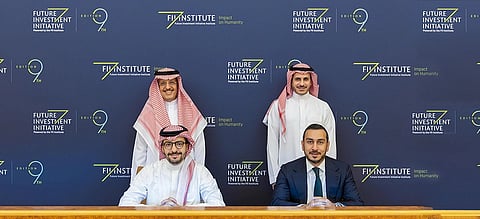
PIF–ACWA Power Partnership: Why This MoU Still Matters for Saudi Arabia’s Sustainable Infrastructure Push
Although the Memorandum of Understanding between the Public Investment Fund (PIF) and ACWA Power was signed earlier this year, its relevance has only grown as Saudi Arabia accelerates its transition toward sustainable urban development.
Beyond the initial announcement, the MoU offers important insights into how the Kingdom is quietly laying the groundwork for a future powered by clean energy, resilient utilities, and resource-efficient infrastructure.
Rising Waters, Rising Alarms: How Global Warming Is Reshaping the World’s Flood Future
1. A Strategic Blueprint for Future Cities
The agreement signals a long-term shift: PIF is positioning utility infrastructure—not real estate design—as the backbone of its giga-projects.
This move reflects a global trend where city competitiveness is increasingly tied to infrastructure resilience, energy independence, and water security. ACWA Power’s involvement helps guarantee that these systems are powered by renewables, enabling entire districts to operate with lower emissions and higher efficiency.
2. Turning Real Estate into a Sustainability Engine
The MoU highlights a deeper policy direction: urban development is now being leveraged as a platform to scale clean technologies.
By embedding renewable energy and advanced water solutions into real estate portfolios from the outset, PIF is transforming buildings and cities into vehicles for sustainability—rather than retrofitting them later at higher cost.
This shift to integrated infrastructure planning marks a new phase in Saudi Arabia’s clean energy expansion.
3. Catalyzing Local Industrial Capacity
One of the most important elements—often overlooked—is the MoU’s commitment to maximizing locally produced content. In the context of global supply chain disruptions and rising demand for sustainable infrastructure materials, developing local capabilities is becoming a strategic necessity.
This initiative helps Saudi Arabia:
Reduce dependency on imported equipment
Strengthen its renewable energy manufacturing ecosystem
Attract private sector investment into green infrastructure
In effect, the partnership supports domestic industrial growth while reinforcing national sustainability goals.
4. Strengthening Saudi Arabia’s Economic Diversification Strategy
PIF’s broader mandate is not just to fund mega-projects but to create scalable sectors that can power the future economy. This MoU aligns with that mission by enabling:
New opportunities in renewable-powered utilities
Advanced water technologies
Circular infrastructure systems
Utility-as-a-service models
These sectors represent high-growth areas globally, and Saudi Arabia is positioning itself early, building a competitive advantage.
5. A Building Block Toward Vision 2030’s “Low-Carbon Cities”
As Vision 2030 moves from planning to execution, the real test lies in implementation. The PIF–ACWA Power partnership is a foundational step toward delivering low-carbon districts, sustainable communities, and energy-efficient buildings across the Kingdom.
What makes this MoU particularly relevant today is the increasing urgency for cities to adapt to climate pressures while supporting economic growth. This collaboration ensures that Saudi Arabia’s flagship real estate projects are built on future-proof infrastructure that can meet evolving energy and water demands.
Read More: Middle East Powers a Sustainable Future: The Region’s Green Energy Revolution
