
UNDP Warns: AI Could Trigger a New Global Divide Without Urgent Action
A new report from the United Nations Development Programme (UNDP) has sounded a stark warning: artificial intelligence, if left unmanaged, could reverse decades of development progress by widening inequality between nations.
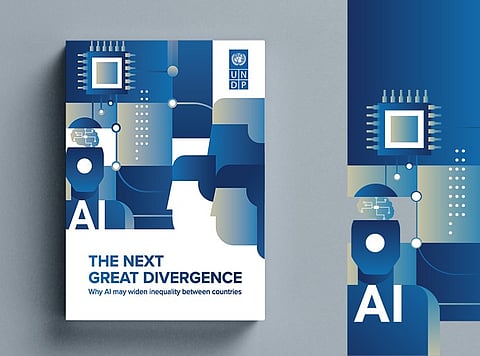
The report, The Next Great Divergence: Why AI May Widen Inequality Between Countries, argues that while AI offers major economic and social benefits, countries begin this transition from vastly unequal starting points. Without inclusive and deliberate policy frameworks, AI could accelerate gaps in income, skills, infrastructure, and governance capacity.
Asia-Pacific at the Center of Transformation
Home to over 55% of the world’s population, the Asia-Pacific region is experiencing a rapid AI surge:
More than half of global AI users are based in the region
China accounts for nearly 70% of global AI patents
Over 3,100 new AI companies have emerged across six economies in recent years
AI could lift regional GDP growth by around 2 percentage points annually, raising productivity by up to 5% in key sectors such as healthcare and finance. ASEAN nations alone stand to gain almost $1 trillion in additional GDP in the next decade.
Yet this momentum risks becoming a double-edged sword.
The Risk of a New Divide
Millions of workers, especially women and young people, could face displacement due to automation if ethical and inclusive AI governance is not implemented.
Key vulnerabilities include:
Jobs held by women are nearly twice as exposed to automation
In South Asia women are up to 40% less likely to own a smartphone
Youth employment in high AI-exposure roles is declining, particularly among the 22–25 age group
Rural and indigenous communities remain “invisible” in AI datasets, increasing the risk of bias and exclusion
Digital readiness also varies widely. While Singapore, South Korea, and China surge ahead with advanced AI ecosystems, many countries still lack foundational infrastructure and skills needed to adopt AI safely and inclusively.
Infrastructure and Governance Gaps Widen Risks
A lack of computing power, skills development, and regulatory oversight could intensify risks such as:
Job displacement and social inequality
Increased global energy and water demands from AI-intensive systems
Data exclusion and algorithmic bias
Cybersecurity vulnerabilities and misuse of generative AI
By 2027, more than 40% of global AI-related data breaches are expected to stem from misuse of generative AI. Yet only a handful of countries currently have comprehensive AI governance frameworks.
Opportunities to Transform Public Services
At the same time, AI has begun transforming government services across the region:
Bangkok’s Traffy Fondue system processed nearly 600,000 citizen reports, improving responsiveness
Singapore’s Moments of Life platform cut parental paperwork from 120 minutes to 15 minutes
Beijing is using digital twin systems for flood management and smarter city planning
These examples show how AI, when deployed responsibly, can enhance public administration, reduce bureaucracy, and improve quality of life.
A Call for Shared, Inclusive Progress
UNDP stresses that the AI era’s central dividing line will be capability. Countries that invest in skills, computing power, and governance systems will thrive; those that do not risk being left behind.
The report urges governments to adopt proactive, inclusive strategies to distribute AI’s benefits fairly and prevent a new era of global divergence.
With deliberate policy choices, AI can become a tool for shared progress — not a catalyst for widening inequality.
