
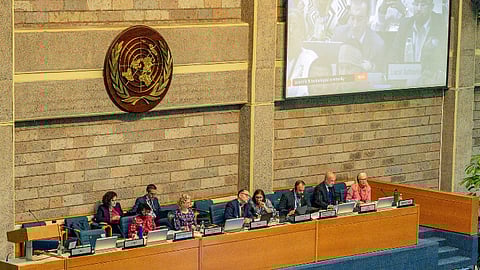
UNEA-7 Opening Plenary: Inger Andersen Calls for Unity and Action on Global Environmental Crises
Inger Andersen, Executive Director of the United Nations Environment Programme (UNEP), delivered a compelling address at the opening plenary of the seventh United Nations Environment Assembly (UNEA-7), held in Nairobi, Kenya.
The assembly, recognized as the world’s most influential environmental decision-making forum, brings together ministers, delegates, and stakeholders from over 170 Member States to chart a sustainable future.
A World on the Boil: New FAO–WMO Report Warns Extreme Heat Is Endangering Global Agriculture
Addressing distinguished guests including UNEA-7 President Abdullah Bin Ali Al-Amri, Kenya’s Cabinet Secretary for Environment Deborah Mlongo Barasa, and other global leaders, Andersen emphasized the urgent need for collective action to tackle the three planetary crises: climate change, biodiversity loss, and pollution.
“Environmental challenges are accelerating. Global temperatures may exceed 1.5°C within the next decade, ecosystems are disappearing, and pollution continues to harm air, water, and land. Now is the time to dig deeper and act ambitiously,” Andersen stated.
Highlighting UNEA-7’s past achievements, she cited key milestones from 2025, including progress on climate adaptation financing, the BBNJ Agreement for sustainable marine biodiversity, and the launch of the Intergovernmental Science-Policy Panel on Chemicals, Waste, and Pollution.
She also pointed to the forthcoming UNEP Global Environment Outlook as a roadmap to transformative action that can deliver economic growth, reduce hunger and poverty, and improve global health.
Andersen applauded the preparatory work of the Open-Ended Committee of Permanent Representatives, which developed 15 draft resolutions and 2 draft decisions addressing issues ranging from artificial intelligence, sustainable mineral use, antimicrobial resistance, to youth engagement in environmental governance.
She further highlighted the inclusive nature of UNEA-7, with nearly 6,000 participants, including ministers, subnational actors, youth, Indigenous Peoples, women, workers, and business representatives contributing to the dialogue and action plans.
“Differences may sometimes feel insurmountable,” Andersen said. “But we all live on the same planet and share the same challenges. Let us summon the indomitable Nairobi Spirit, meet on common ground, and deliver sustainable solutions for a resilient planet.”
UNEA-7, under Andersen’s stewardship, is set to continue as a platform for ambitious, multilateral environmental action that seeks to safeguard the planet for current and future generations.
Read More: Tajikistan’s Melting Glaciers put Water Resources under Stress, UNEP Atlas Reveals
